On this page
- Ninjas under a moonlit castle
- Legal note for India
- The published numbers in rupee terms
- What a spin looks like
- Why the extra rows matter
- Three bonus rounds, read before you play
- A ₹10 session worked through
- Dry spells, in numbers
- Two builds, two price tags
- Setting a budget that fits
- Who it suits
- Related games
- Practising with play money
- Shadow Strike free demo
- Frequently asked questions
Ninjas under a moonlit castle
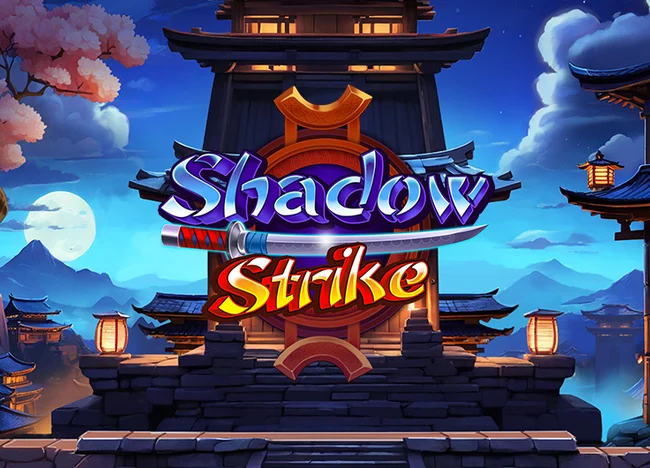
The release date was 18 June 2024, and Backseat Gaming pitched it as a dive into a shadowy, action-heavy world of ninjas. The visuals follow through: a moonlit Japanese fortress, paper lanterns, flowering trees, and a sword blade slicing across the title.
The studio's original game page lists the core facts. The base grid is 5x4 and grows to 5x6 through Feature Reels. There are three bonus rounds. Two RTP builds exist, 96.36% and 94.31%. The maximum win is 15,000x the stake, the hit frequency is 24.37%, and volatility is high, graded 4 out of 5.
The studio later relaunched itself, and its current site leaves this title out, so our figures come from the original page, cross-checked with the official demo build.
Legal note for India
Since 1 May 2026, the Promotion and Regulation of Online Gaming Act, 2025 has banned offering, advertising and facilitating payments for online money games anywhere in India. Petitions against it are pending before the Supreme Court, and state laws apply alongside. Real-money play is strictly for adults 18+. The official demo embedded here runs on virtual credits.
The published numbers in rupee terms
| Fact | Figure | In practice |
|---|---|---|
| Grid | 5x4, up to 5x6 | 20 cells normally, 30 when stretched |
| RTP | 96.36% or 94.31% | The operator picks; check the help screen |
| Hit frequency | 24.37% | Close to one winning spin in four |
| Volatility | High, 4 of 5 | Long quiet spells, rare big results |
| Top win | 15,000x | ₹1,50,000 on a ₹10 stake |
The studio's page leaves out how wins are counted, which stakes are available and what each symbol pays. All three are in the help screen of the game, and the sections below explain what to look for there. Think of this page as a map: what is confirmed, and what you still have to read for yourself.
What a spin looks like
- Choose your stake from the range your site allows; the game settings show it.
- The reels stop, showing five columns of four rows.
- Wins pay under the game's own pay system, described in the paytable.
- Feature Reels, when they come in, add two more rows and turn the window into 5x6.
- Bonus triggers for the three rounds are checked.
Why the extra rows matter
Going from 5x4 to 5x6 takes the grid from 20 cells to 30, an increase of fifty percent. Every extra cell is another place for a matching symbol or a special symbol to land, which is why growing grids are one of the usual ways slots reach very large top wins.
The studio ties the growth to the Feature Reels but does not say when they show up or how long the taller grid stays. The help screen covers that. In the demo, look for three answers: what brings the Feature Reels in, whether the extra rows last one spin or a whole feature, and whether the way wins are counted changes on the taller grid.
Three bonus rounds, read before you play
The studio calls its bonus design multi-layered and counts three rounds, but it does not explain them on its page, and we will not fill the gap with guesses. Even so, the number is telling. Value is split across three features rather than one, so two equally long sessions may play out nothing alike, purely because of which round shows up.
For each round, the rules screen should tell you how it starts, how long it runs, which special symbols or multipliers appear in it and whether a purchase option exists. If your version shows a bonus buy menu, set each price against what you have seen that round pay in the demo before considering it.
A ₹10 session worked through
Here is how the hit rate and the cap translate into a real-looking session. Take a ₹10 stake for 300 spins, which is ₹3,000 wagered.
- At 24.37%, about 73 spins would show a win and about 227 would not.
- Over the long run, the 96.36% build returns ₹2,890.80 on that ₹3,000; the 94.31% build returns ₹2,829.30.
- The single biggest possible result at ₹10 is ₹1,50,000.
The distance between that average and that ceiling is the whole idea of a high volatility game. The typical session lands near the average or under it; only a handful end miles above.
Dry spells, in numbers
A hit rate becomes easier to feel when you turn it into losing streaks. Assume a 24.37% chance per spin and no link between one spin and the next; the odds that a losing run of a given length begins at any particular spin are roughly:
| Losing run | Approximate odds |
|---|---|
| 8 spins | 10.7% |
| 12 spins | 3.5% |
| 25 spins | 0.09% |
Across a few hundred spins you should expect several runs of eight or more blanks, and a dozen in a row is entirely ordinary. None of that means the game has gone cold; it is simply what the maths produces. It also explains why planning by spin count beats planning by rupees: decide how many spins you want, then divide your budget to find the stake.
Also remember that a flashing win and a profit are different things. In a game this volatile many small base game hits pay back under the stake, which lets the balance shrink even as the screen keeps celebrating.
Two builds, two price tags
The two RTP builds are 96.36% and 94.31%, and the operator decides which one you get. On ₹1,00,000 played over time, the first keeps about ₹3,640 on average and the second about ₹5,690. That ₹2,050 difference is invisible in one evening and very real over months.
A volatility grade of 4 out of 5 puts the game firmly in the high bracket: the base game tends to stay quiet for long periods, and the bonuses hold the bulk of the value.
Setting a budget that fits
Suppose you set aside ₹5,000 and want around 400 spins, enough for several shots at the bonus rounds.
- Stake: ₹5,000 over 400 spins is ₹12.50 a spin; round down to the nearest bet your site offers.
- Average cost: at 96.36%, ₹5,000 wagered costs about ₹182 on average; at 94.31%, about ₹285. Real sessions swing far wider.
- Ceiling: at ₹12.50, 15,000x is ₹1,87,500.
- Stop points: decide a loss limit, such as half the budget, and a figure at which you take a win and leave.
If the minimum bet on your site is higher than your planned stake, cut the spin target or increase the budget. Raising the stake on the same budget just means fewer chances to reach the features where most of the value sits.
Who it suits
Shadow Strike fits players who are happy to sit through long quiet stretches for a shot at a very large result, and who enjoy working out a game's rules for themselves. If you prefer a slot that explains everything up front and pays little and often, a lower volatility title will feel friendlier on a mobile session between other things.
Related games
From the same studio and year, Barrel Bonanza shares the 5x4 layout, yet its cap is 10,000x, its volatility is graded medium and about 27% of its spins win. Shadow Strike takes more risk for a bigger ceiling. Among the larger titles, Gates of Olympus 1000 has the same 15,000x cap with a completely different tumble and multiplier engine.
Practising with play money
Backseat Gaming's own demo works in your browser with play credits; our demo guide explains the basics. Over a few hundred spins, record:
- how wins are counted and what each symbol pays at your bet;
- what calls in the Feature Reels, and for how long the taller layout stays;
- the trigger and the rules of every bonus round;
- the RTP build and bet limits in the help screen.
Set your stop points before the first spin and stick to them. With volatility this high, chasing a bonus that has not arrived is the quickest way to blow through a budget.
Where Shadow Strike is offered for real money

Frequently asked questions
Which studio made Shadow Strike?
Backseat Gaming put it out on 18 June 2024. The studio's current website omits it, but the official play-money demo still works and loads on this page.
What RTP does Shadow Strike have?
Two builds exist, 96.36% and 94.31%, and the operator chooses. On ₹1,00,000 played over time, the gap between them is about ₹2,050 on average. Your casino's help screen names the one in use.
What is the top win in rupees?
The studio lists 15,000x the stake. That is ₹1,50,000 on a ₹10 spin, or ₹7,50,000 on a ₹50 spin.
What do the Feature Reels do?
They add two rows, so the window grows from twenty cells to thirty. When they appear and how long the bigger grid lasts are explained in the game's help screen.
How volatile is Shadow Strike?
Backseat Gaming grades it 4 out of 5, with a 24.37% hit frequency. Roughly one spin in four wins, and most of the value is concentrated in the three bonus rounds.
How many bonus rounds are there?
Three. The studio lists them without detailing their rules on its page, so read how each one starts and works in the help screen, ideally during a few demo sessions.
Can I play Shadow Strike for real money in India?
The Promotion and Regulation of Online Gaming Act, 2025, in force since 1 May 2026, prohibits offering online money games in India, with challenges pending before the Supreme Court and state rules in addition. The demo here uses virtual credits.